#ad – this guide contains affiliate links. If you buy through them, HomeTechFit may earn a commission at no extra cost to you.
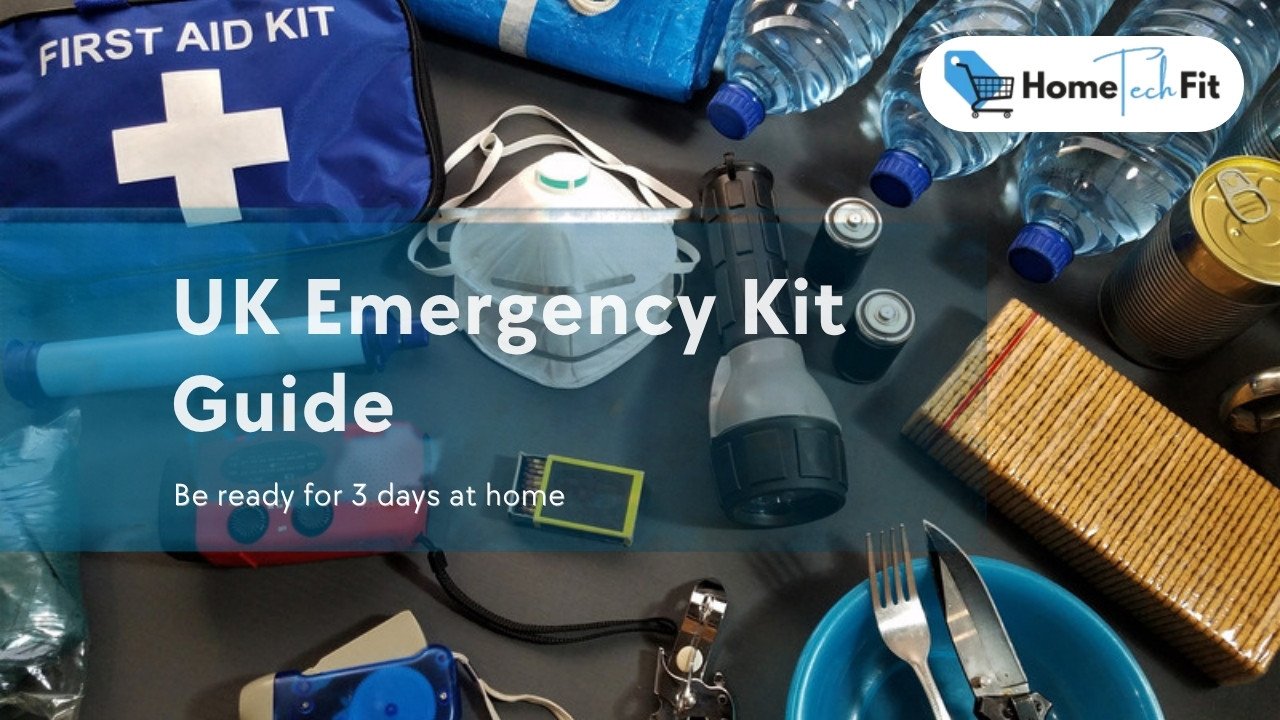
The government’s new Be Ready campaign asks every UK household to be able to manage on its own for three days if the power, water or shops are disrupted. The quickest way to get there is a ready-made 72-hour emergency kit: one bag, packed and ready, that you can store and forget.
But not all kits are the same, and none of them is a complete solution on its own. This guide compares the ready-made kits we list for UK homes, by household size, and is honest about what each one leaves out.
Quick picks
- Best for one person: Blue Seventy-Two Pro 72-Hour Emergency Backpack, the most complete single-person bag we list.
- Best for couples: First My Family 72-Hour Survival Kit – 2 Person, food, water and first aid for two in a waterproof backpack.
- Best UK-assembled family kit: EVAQ8 72-Hour Emergency Go-Bag – 4 Person, packed in the UK for British homes.
- Best one-bag family alternative: Emergency Zone 72-Hour Family Survival Kit – 4 Person, a discreet backpack with space for your own extras.
- Best top-up: EVAQ8 72-Hour Food & Water Box, a small box that adds food, water and warmth to any kit.
What does “72-hour kit” actually mean?
A 72-hour kit is designed to cover the basics for three days: long-life food, some drinking water, warmth, light and first aid. Most come packed in a backpack so you can grab it and go if you have to leave home, or open it at the kitchen table if you’re sheltering in place through a power cut.
The food and water in these kits usually has a five-year shelf life, which is the main advantage over building your own from the cupboard: you don’t need to keep rotating tins and bottles.
The one thing every ready-made kit is short on: water
This is the part most product listings don’t spell out. UK government guidance suggests storing at least 3 litres of drinking water per person per day, so 9 litres per person for three days. Ready-made kits contain emergency water pouches, which are measured in hundreds of millilitres, not litres. For example, the EVAQ8 food and water box includes 500ml of water.
That’s not a reason to skip a kit. The water pouches are useful if you have to leave home, because they’re light and won’t go off. But for sheltering at home, you’ll still want bottled water multipacks stored separately. Water purification tablets, which some kits include, are a good backup if your supply is disrupted.
The kits compared
For one person
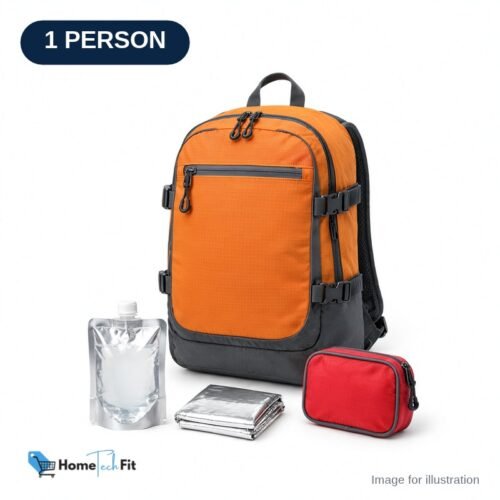
Blue Seventy-Two Pro 72-Hour Emergency Backpack
The most fully loaded single-person kit we list. You get 2,400 kcal of food bars and five pouches of emergency water (both with a five-year shelf life), a 36-piece first aid kit, a foil blanket, a rain poncho, a whistle and compass, a canteen cup, and even a deck of cards for long waits. It all sits in a reinforced three-compartment backpack.
Best for: people living alone, students, or as one bag per adult in a larger household.
EVAQ8 72-Hour Emergency Food & Water Box
Not a full grab bag, but a compact box with a 2,400 kcal food ration, 500ml of water, an adult foil blanket, a 12-hour light stick and purification tablets to treat ten litres of water. It’s packed in the UK and small enough for a desk drawer or car boot.
Best for: topping up a kit you’ve built yourself, or keeping in the car or at work.
For two people
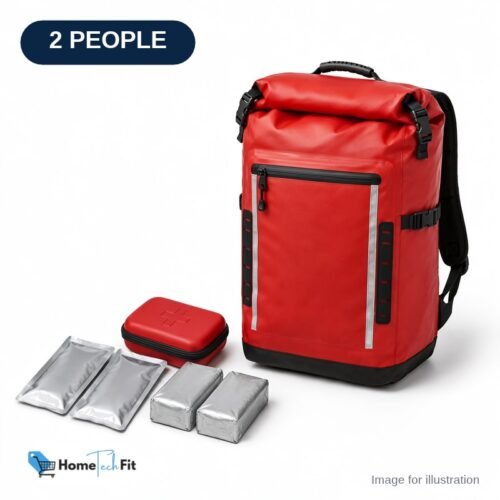
First My Family 72-Hour Survival Kit – 2 Person
Food and water rations for two people for three days, with a stocked first aid kit, in a compact waterproof backpack.
Best for: couples and flat-sharers who want one bag to cover both of them. Keep it in a hallway cupboard or under the stairs.
For a family of four
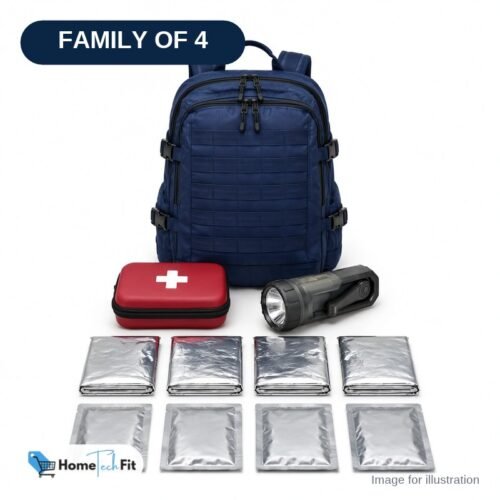
EVAQ8 72-Hour Emergency Go-Bag – 4 Person
Assembled in the UK by EVAQ8, with long-life rations for a family-sized household for 72 hours. Designed to work whether you’re staying home through a power cut or leaving in a hurry.
Best for: families who want a UK-packed kit from a specialist brand.
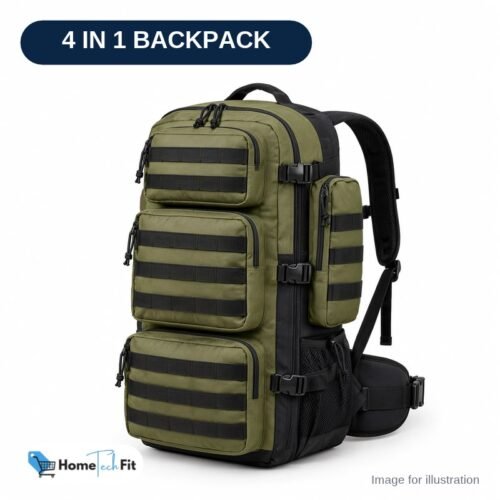
Emergency Zone 72-Hour Family Survival Kit – 4 Person
One padded, plain black backpack covering four people, with food and water rations (five-year shelf life) and survival basics. It leaves room for your own medication, clothes and chargers, and includes a printed guide to making a family emergency plan. It’s imported, so allow about a week for delivery.
Best for: families who’d like a discreet bag and a ready-made plan to work through.
One bag per person, or one family bag?
A single family bag is cheaper and simpler to store. The downside is weight: a four-person kit is heavy for one adult to carry, and if your household gets split up, only one of you has the supplies. Many families choose a mix, such as a family kit at home plus a small top-up box in the car.
What to add to any ready-made kit
A ready-made kit covers the basics. These are the gaps worth filling, roughly in order of importance:
- Bottled water to reach 9 litres per person (see above).
- Your own medication, plus a written list of medicines and doses.
- A radio that doesn’t need mains power, such as a wind-up solar emergency radio, so you can hear updates if mobile networks are down.
- A proper first aid kit. Kit first aid packs are basic. A fuller kit such as the Lewis Plast 160-piece kit with eyewash covers the items government guidance lists.
- Copies of documents in a fire and water resistant document bag.
- Phone power: a charged power bank, or a portable power station if you want to keep a router and lights going too.
- Personal items: glasses, baby supplies, pet food, spare keys and some cash.
Our UK emergency kit checklist covers everything in more detail.
Where to keep it, and when to check it
- Keep the kit somewhere everyone knows about and can reach quickly, such as by the front door, under the stairs or in a hallway cupboard.
- Put a reminder in your phone to check it every six months. Look at expiry dates, swap in seasonal clothing and recharge anything with a battery.
- Store it away from direct heat. A garage or loft that gets hot in summer can shorten the life of food and water rations.
Frequently asked questions
Is a ready-made emergency kit worth it?
If you want the basics covered in one go, yes. You get long-life food, water, warmth and first aid in one bag that lasts for years. Just remember to add bottled water and your own medication.
How much water is in a 72-hour kit?
Usually a few emergency water pouches, which add up to well under a litre per person. Government guidance suggests 3 litres per person per day, so store bottled water alongside your kit.
How long do emergency kits last?
The food and water rations in the kits we list have a five-year shelf life. Check the expiry dates printed on the packs when your kit arrives and note them down.
What’s the difference between a grab bag and an emergency kit?
An emergency kit helps you stay at home for three days. A grab bag is a lighter bag you can carry if you’re told to leave. Most ready-made 72-hour kits are designed to do both. See our grab bag list for what to pack if you have to leave in a hurry.
Should I keep a kit in the car?
It’s a good idea, especially in winter. A small food and water box, a foil blanket, a torch and a phone charger take up little space in the boot.
Ready to get sorted? Browse the Emergency Kit hub for ready-made kits, radios, first aid and power for UK homes.