#ad – this guide contains affiliate links. If you buy through them, HomeTechFit may earn a commission at no extra cost to you.
Most UK emergency advice is about staying at home: keeping water, food and a torch ready to ride out a power cut. But sometimes the emergency services ask people to leave their home, for example because of flooding, a fire nearby or a gas leak. When that happens, you might have minutes to get out.
That’s what a grab bag (also called a go-bag) is for. Government guidance suggests keeping the things you’d need if you had to leave quickly together in a spare bag, so you’re not hunting for passports and phone chargers in a hurry.
Grab bag or emergency kit: what’s the difference?
- Emergency kit: supplies to help you stay at home for three days, such as bottled water, tinned food and blankets. It can be bulky. See our UK emergency kit checklist.
- Grab bag: a lighter bag you can carry if you need to leave. It focuses on documents, medication, communication and a day or two of essentials.
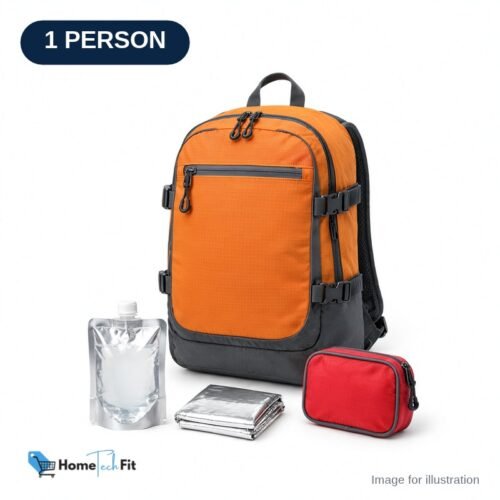
Many ready-made 72-hour kits come in a backpack and can do both jobs. If you’re short on space, one well-packed backpack is a good place to start.
The grab bag checklist
Documents and money
- Copies of passports, driving licences and birth certificates
- Home insurance policy number and the insurer’s claims phone number
- A printed list of emergency contacts, including family, your GP and your energy supplier
- Some cash in small notes, in case card machines are down
- Spare house and car keys
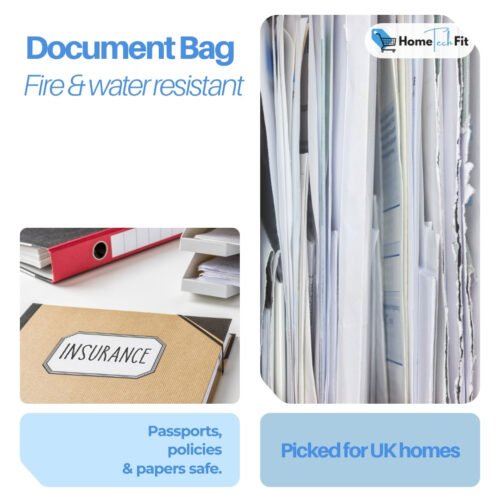
Keep the paperwork together in a fire and water resistant document bag. It’s slightly larger than A4, closes with a zip and a hook-and-loop flap, and folds flat to fit inside a bag.
Medication and first aid
- A few days’ supply of any prescription medication
- A written list of medicines, doses and allergies
- Spare glasses or contact lenses
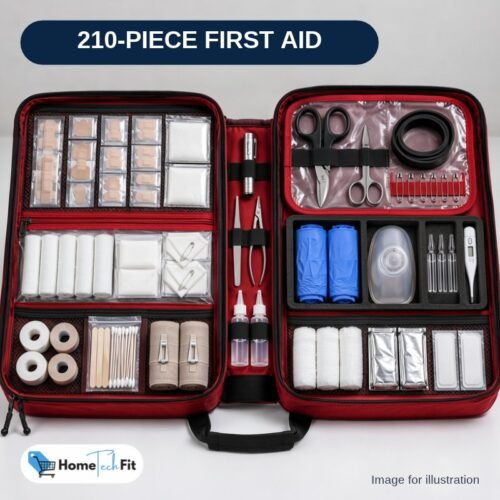
- A compact first aid kit
A kit like the General Medi 210-piece first aid kit comes in a reflective pouch that’s easy to spot in low light, and is compact enough to sit inside a grab bag.
Light, power and news
- A torch, with spare batteries
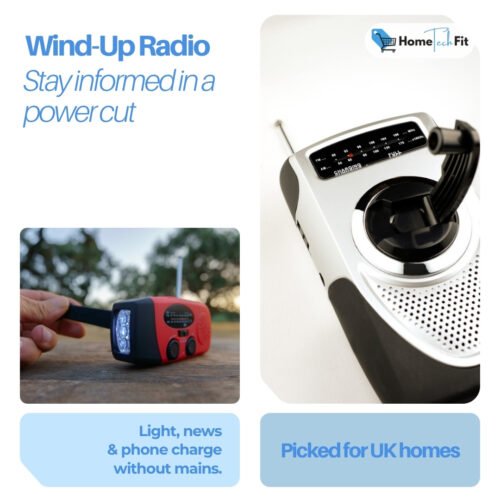
- A battery or wind-up radio
- A charged power bank and phone cables
A wind-up solar emergency radio covers three of these at once: AM/FM radio, a built-in torch and a 2,000mAh battery to top up a phone, all powered by hand crank, solar or USB. It also has a loud SOS alarm.
Water, food and warmth
- Bottled water or long-life water pouches
- Snacks or emergency food bars that don’t need cooking
- A change of clothes, a warm layer and a waterproof
- A foil emergency blanket
If you’d rather not pack these yourself, the EVAQ8 72-Hour Food & Water Box adds a 2,400kcal ration, 500ml of water, a foil blanket, a 12-hour light stick and water purification tablets in one small box.
Hygiene
- Toothbrush and toothpaste
- Hand sanitiser and wet wipes
- Toilet roll and sanitary products
For children and pets
- Nappies, formula and a comfort toy for little ones
- Pet food, a lead or carrier, and a copy of vaccination records
Want it done in one go? Ready-made grab bags
A ready-made backpack covers most of the list above, then you add your documents, medication and personal items.
- For one person: the Blue Seventy-Two Pro backpack includes food, water pouches, a 36-piece first aid kit, a foil blanket, a rain poncho, a whistle and a compass.
- For two: the First My Family 2-person kit comes in a compact waterproof backpack.
- For a family: the EVAQ8 4-person go-bag is assembled in the UK.
We compare them in detail in our guide to the best 72-hour emergency kits in the UK.
Where to keep your grab bag
- Near the exit you’d use, such as a hallway cupboard or under the stairs, not in the loft or a garage you might not be able to reach.
- Somewhere everyone knows about, including older children.
- Above ground level if you live in a flood risk area.
Check it every six months: swap clothes for the season, check medication and food dates, and recharge the power bank.
If you’re asked to leave: a 60-second checklist
Always follow instructions from the emergency services first. If you have time and it’s safe:
- Grab your bag, phone, keys and any medication not already packed.
- Turn off gas, electricity and water if you’ve been told to and it’s safe to do so.
- Unplug appliances.
- Take pets with you in a carrier or on a lead.
- Lock doors and windows.
- Don’t walk or drive through flood water.
- Let family know where you’re going.
Find out now where your stopcock, gas valve and fuse box are, so you’re not searching for them on the day.
Frequently asked questions
What should be in a grab bag UK?
Copies of important documents, cash, spare keys, medication, a first aid kit, a torch, a battery or wind-up radio, a phone power bank, water and snacks, a change of clothes, a foil blanket and basic toiletries. Add baby or pet supplies if you need them.
How heavy should a grab bag be?
Light enough for the person carrying it to manage comfortably for a long walk. If it’s too heavy, split the contents into one bag per adult.
Should every person have their own grab bag?
It helps, especially in larger households, as it spreads the weight and means everyone has the basics if you get separated. At a minimum, keep one main bag and make sure each adult carries their own phone, keys and medication.
Do I need originals of documents in my grab bag?
Copies are usually enough and safer to store in a bag. Keep originals somewhere secure at home, and consider keeping digital copies on your phone too.
Pack yours this weekend. Browse the Emergency Kit hub for ready-made grab bags, radios, first aid kits and document bags.